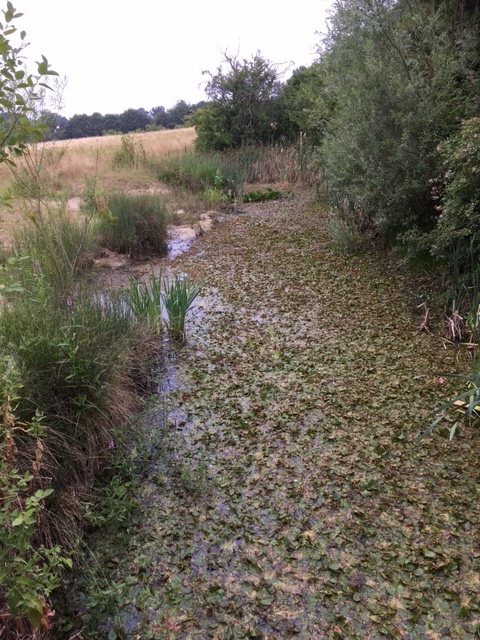
It was a short Wednesday walk around the Country Park. We are lucky to have this facility in the village and a group of caring villagers cut the paths, tend the trees, look after the pond and the wildlife. Those of us who just enjoy the open space are grateful to those who do the work. Thank you.
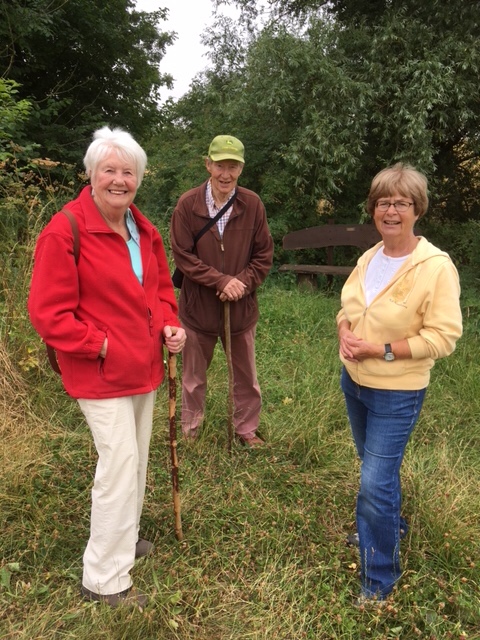
At the end of the walk we stopped outside the church where Heather had set up the monthly coffee morning. We were talking about ecclesiastical matters, the rise of the CRB check required to do anything at all civic minded. I mentioned that grandson is coming to stay at The Gables tonight and how much I enjoy reading to him at bedtime. He usually chooses history books and last week we read one about evacuees.
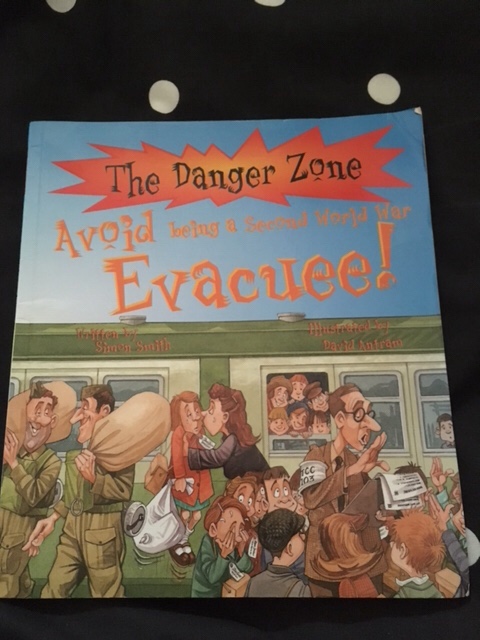
My mother was evacuated to an academic family in Oxford during the War and grandson and I have read the couple of pages that I asked Mum to write about her experiences. As I said this to my fellow walkers, Ken and Thelma (both originally from Derbyshire) told me that their families had taken in children from the East End of London during the phoney war. Ken’s family were allocated an 11 year old boy whose younger brother had been billeted six miles away. The poor lad had been told by their mother to take care of brother so he was constantly running away to try and find his younger sibling. Eventually Ken’s family managed to take him to see the young boy and reassure him that his brother was fine. Thelma’s evacuee was a seven year old girl who was so distressed at leaving her mother that she got sent back to London early. In the time they were in Derbyshire their families could not visit because of the distance and the expense. Extraordinary times and an extraordinary movement of children from the cities into the homes of complete strangers in a time when few houses even had a telephone. Difficult to imagine.
 gfreedmanblog
“No Time to Wave Good-bye” by Ben Wicks (Bloomsbury:1988) is a record of 3,500,000 British evacuees. A small minority suffered abuse; some did not want to return home! An interesting experiment in saving a generation from the blitzkrieg.