My paternal grandmother was always poor. Born and raised in the slums of the East End of London at the turn of the last century, she left school early and became a cigarette maker in a sweat shop. When she married she gave up work and they subsisted on my grandfather’s meagre wages. These were supplemented by the small sum that my father gave his mother from his weekly earnings as a lowly office boy. Some of this money she put aside and saved to buy herself a few pieces of jewellery. A pair of jade earrings, a silver brooch in the shape of a violin, a diamanté clasp and a large green stone and gold ring that she wore on any special occasion. It was what you would call “bling” today and she always told me that one day it would be mine.
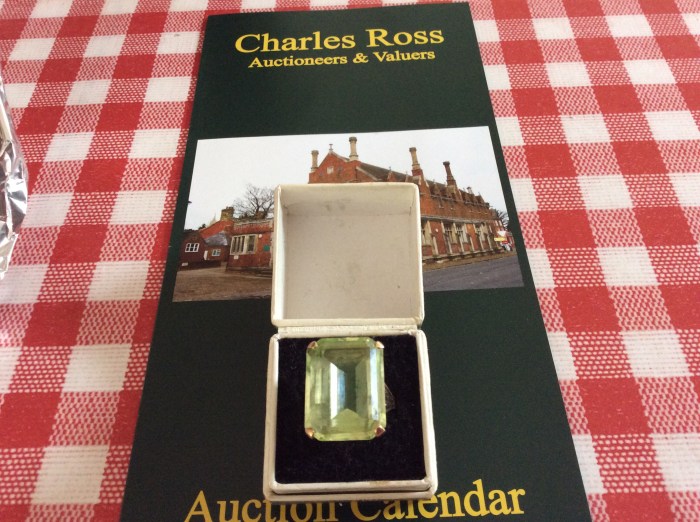
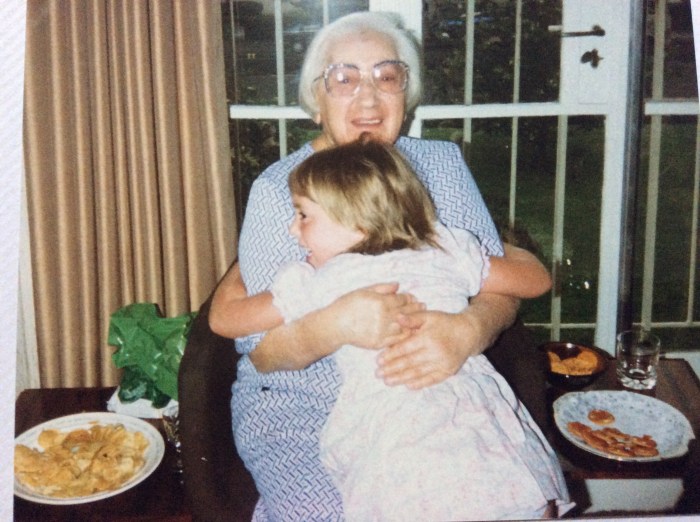
As I became a teenager, grandma began to empty her cupboard of her few saved belongings. A collection of First World War postcards, a silver owl on a chain, a tortoiseshell fountain pen,a cameo brooch and a silver bracelet. The last item she bestowed was the green ring and this was shortly before she died at nearly 94. She owned nothing else of value in her one bedroom flat and she left no money but she had been blessed to have one child, two grandchildren and to know two great grandchildren who saw her regularly and loved her immensely.
The green ring has sat in my jewellery box for many years alongside earrings made in China and knickknacks picked up at jumble sales and charity shops. I suppose I always thought that it was valuable but I never found occasion to wear the jewel. Last week I read an advert in the local Bedfordshire newspaper announcing jewellery and antique valuations today in Cople, a village a few miles away. I decided to take grandma’s ring and jade earrings to be valued. It was a pleasant drive through lush, green countryside and, when I parked at The Barn, a gentleman directed me to the jewellery expert sitting under a small awning. She examined the ring with her eyeglass.
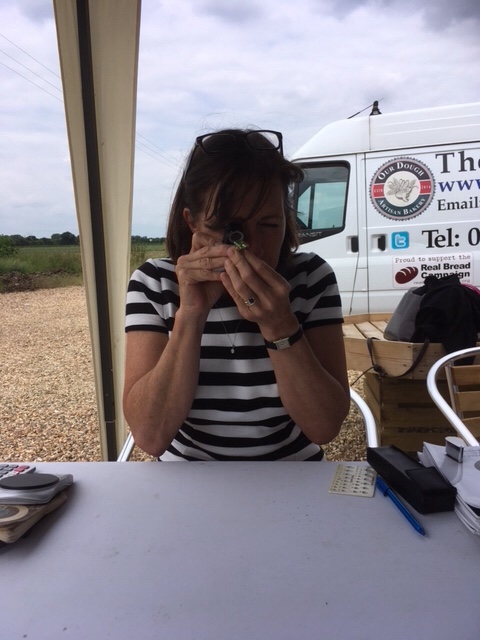
I could tell from the woman’s face that I did not own a priceless piece. Her opinion was that the green stone was a semi precious beryl set in 9 carat gold. At auction it might fetch £70 to £100. I then showed her the jade earrings. She pronounced them circa 1930’s when the fashion for jade gave rise to glass earrings coloured green. Although set in silver the diamond looking decoration is only paste. I was relieved, believing that my grandmother would have been set an evil eye upon me had she known that I was thinking of selling her precious jewels. Now I can wear the earrings (although probably not the ring but who knows, on a special occasion?) without worrying that I might lose of damage them. I drove back along Cople Road and stopped, abruptly, at a field full of what looked like goats.
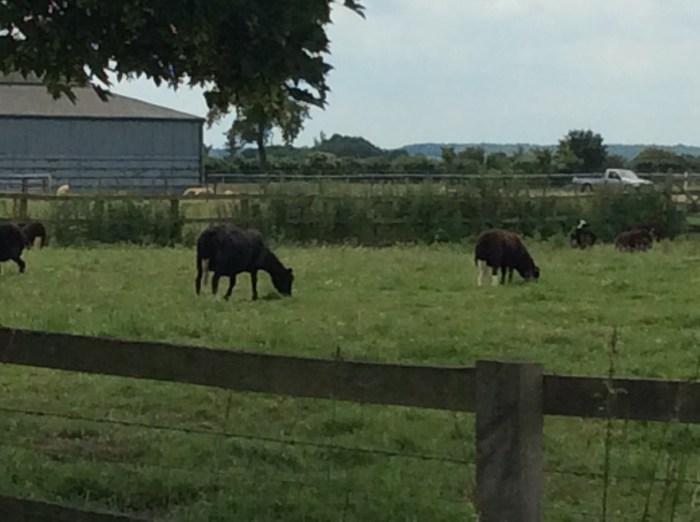
They were Balwen welsh mountain sheep with distinctive black and white faces and tails. Quite lovely. Then it was on towards the bridge at Great Barford where the single lane road over the river gives rise to a four way traffic light system. For five years I have wanted to stop by the river and today I drew the car into a lay-by and walk along the towpath, getting a view of the ancient bridge that I hadn’t seen when driving.
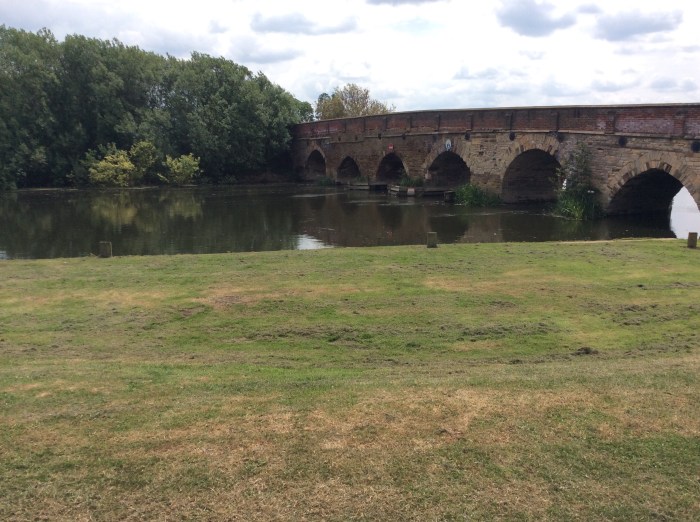
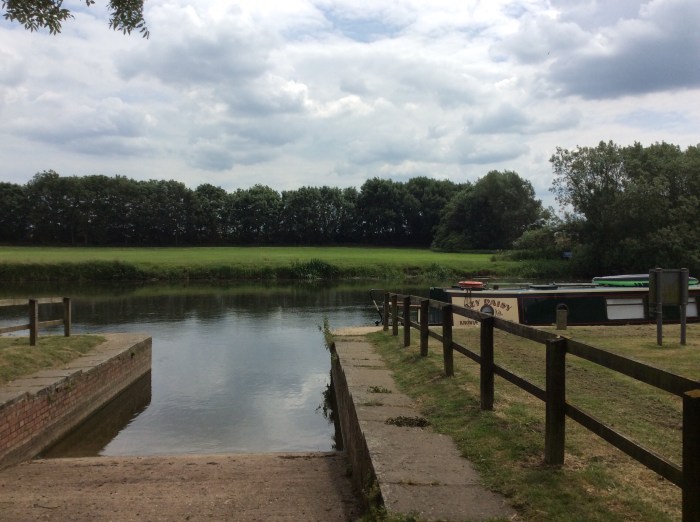
A quick walk through the churchyard and a tug at the door (it was, sadly, locked)
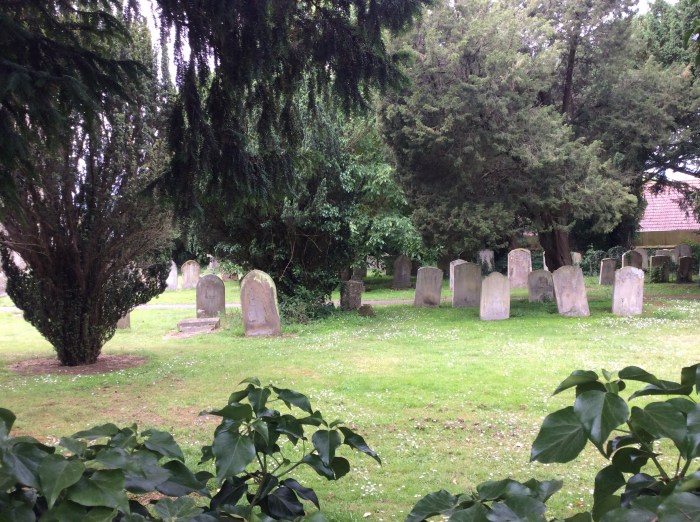
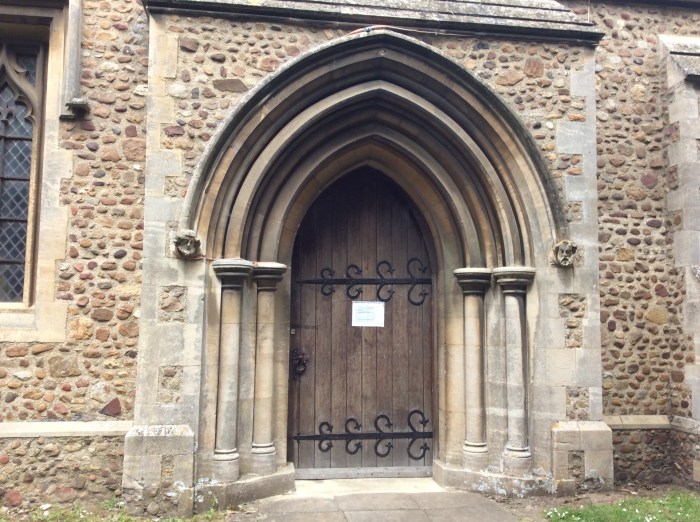
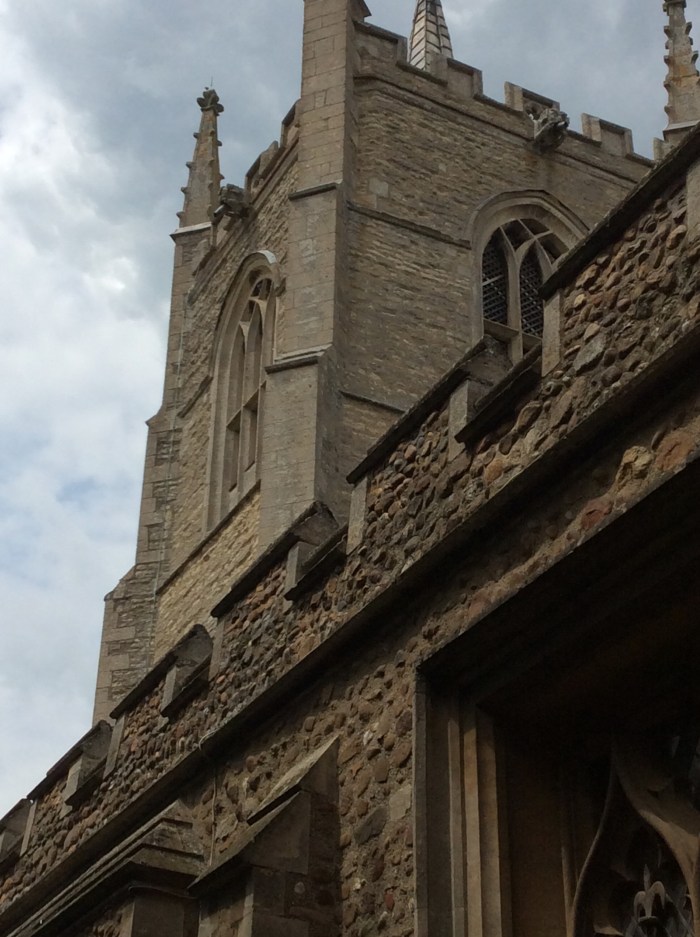
and then it was home again to tell Jeremy that he was not able to retire on the proceeds of grandma Katy’s inheritance. Rest easy grandma, your great grandchildren and their children will be the keepers of your mementoes. Thank you.
 gfreedmanblog
What a lovely day of discoveries! The ring looks lovely – so does the bridge!
Reminds me of one of my Mum’s favourite rings, which resembles a cornelian, which in fact is a piece of amber coloured glass in a gold setting. See you have been to Great Barford – home of artist Eric Ravillious and autobiography (albeit rather dull) of his wife Tirza Garwood. (Published by Persephone Books – Long Live Great Barford – available for borrowing if so desired). Shabbat shalom L x