

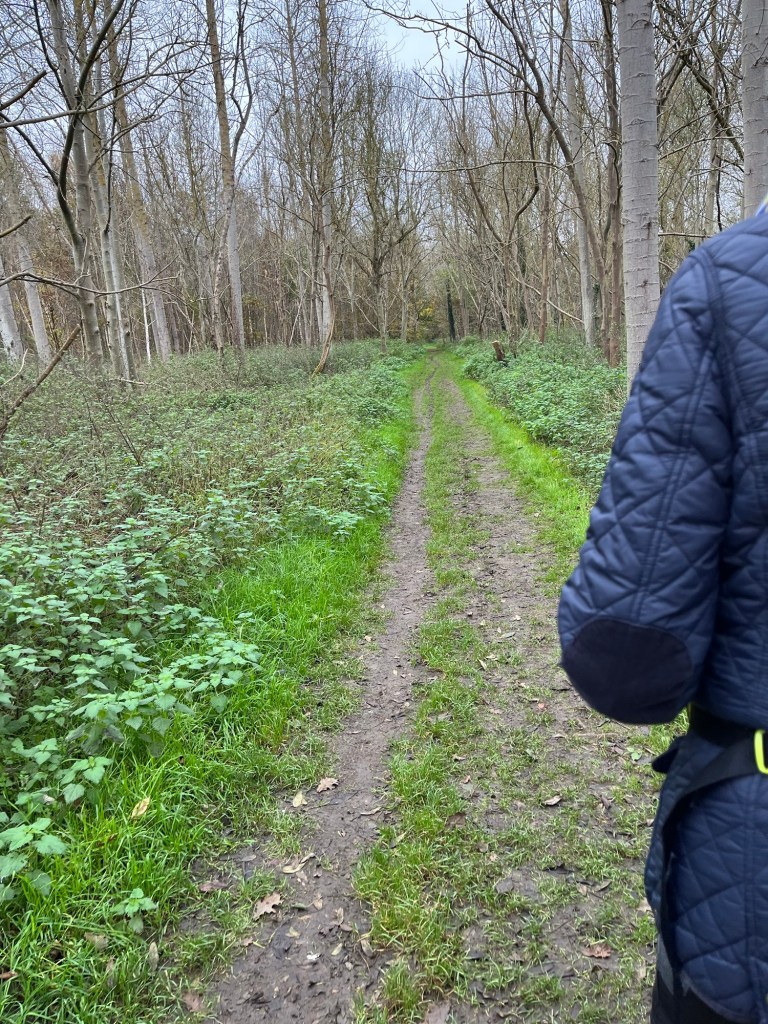
And as we walked through the woods at Deepdale we passed an old coprolite quarry. You may well wonder, as we all did, what’s a coprolite quarry or mine? Here’s the answer – I kid you not.
Victorian Coprolite Mining & Pterosaurs
SHORT SUMMARY:
The industry began in the mid 19th century, when shortage of food after the Napoleonic Wars caused an influx in demand for fertilisers. The coprolite itself is fossilised dinosaur faeces which, when ground up, can be mixed with acid or water to make fertiliser. This fertiliser was discovered when a brick kiln using local clay exploded. One of the first areas in Cambridge to undergo coprolite mining was Coldham’s Common between the 1850s and 1890s. Wages were far higher in mining than agriculture so there was a ‘coprolite mine rush’ with huge pits dug on the common. The making of fertiliser and mining of dinosaur poo began to decline when international competition kicked in from America. But the industry was revived during the First World War when imported goods became unreliable and England needed to grow more food.:
 gfreedmanblog
The village of Shillington near Houghton Conquest in Mid-Beds used to be called Shittington as coprolite was dug from the local hill. Not surprisingly the village changed its name