Last year was a record year for lambs with 24 born and 22 surviving from 14 sheep. This year we only have 13 live lambs and I’ll explain why
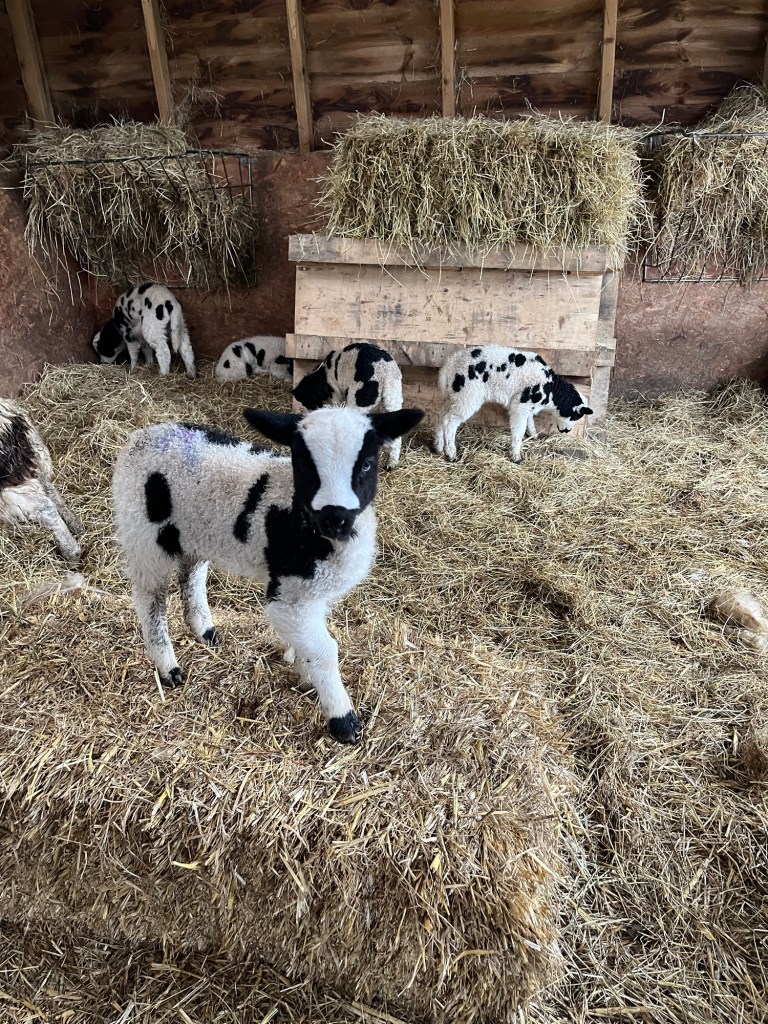
We had to help several of the ewes to deliver. That’s usually the exception rather than the rule here. Of those assisted deliveries many of the lambs were stillborn. On Friday our lovely sheep Spot was in labour all day and we began to get concerned. I called the vet and of our regular vet attended and delivered two lambs who exhibited deformities in their leg joints. He explained that there is a virus which has been infecting cattle, sheep and goats called Schmallenberg virus (named after a town in Germany where it was first noticed). The virus infects the animals through midge bites. If the sheep is bitten and is in the first month of pregnancy the foetus will be reabsorbed. If the sheep is infected after that then the virus produces lambs with deformities. The vets are all teachers at Cambridge veterinary school (part of the university) and they have a small flock of sheep at the vet school. Their flock has been similarly afflicted this year. The good news is that following a midge bite that is carrying virus the sheep become immune to the virus for up to five years.
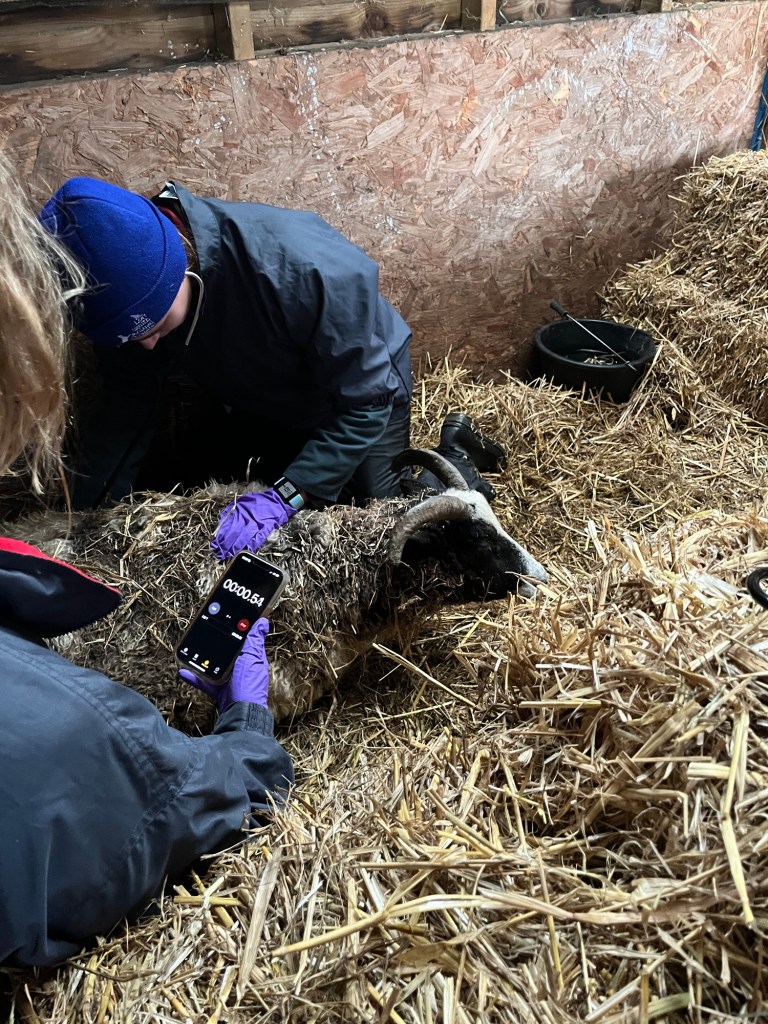
Last night at 10 o’clock we went out to give the three bottle fed lambs their last feed and to check on the one remaining pregnant sheep, Gertie. She was lying down with a dead lamb next to her snd was still in labour. I had to pull the second lifeless lamb out of her after which she was exhausted and stayed on the ground. We lifted her gently onto a wheelbarrow and wheeled her, by torchlight, to a pen in the barn where we made her comfortable. This morning she was still lying down looking the worse for wear. I called the vet school and another vet we know came out this afternoon with six final year students. They examined Gertie and found a third lamb inside her which they pulled out – lifeless with a twisted head. Poor old Gertie. We have been given injections to administer this week and hope that she will revive.
I’m glad that lambing is over this year. I think that we will retire some of our old girls and just let them live out their days as old ladies at The Gables.
 gfreedmanblog
Wh
Oh my, what a catalogue of problems. Hope the lambs you have up on their feet will all now thrive. Strange how some years all goes pretty easily, and the next there can be loads of problems.
Also what a strange day – started out nice and then it went downhill from then! But not really cold – for mid February!
Let’s have a week of cold frosty weather and then it can start to really dry up as everyone and all the animals are really fed up with this slop!
I will try and pop in sometime over the next few days, but recently if I have come past the dog and I are soaked through, or really muddy!
Keep smiling with your healthy babies.
Xx Kate
Sent from my iPad
What a sad time Gill. By the way, is Spot okay in herself? xx
One wonders if the increase in Schmallenberg virus is not down to climate change. These wet and warm winters are ideal for midge breeding, and a lot of other insects. We need some hard, sharp frosts to kill them off.